

Legal Life Community Spotlight – Dzifa Vanderpuye
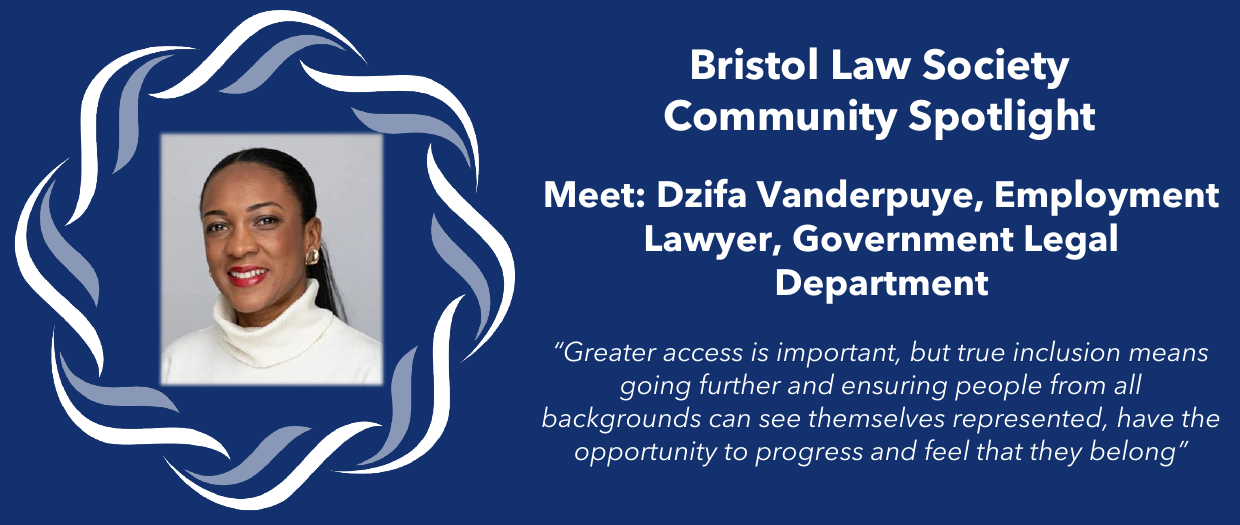
Can you tell us about your journey into law and where you are now?
My legal journey began in Ghana. I had decided I wanted to become a lawyer before completing my undergraduate studies. At the time, studying law was a second degree in Ghana and was expensive, so my family circumstances meant I had to fund it myself.
I worked in England for a year under the student working visa scheme and saved some money. I then worked for another year after completing my national service, in a client care role with the biggest telecommunications company in Ghana. I resigned after exactly a year to pursue my dream of becoming a lawyer. I had saved enough to cover the first two years of my degree, but had no idea how I would fund the remaining two years. I took on different jobs, including part-time work with a consulting firm and buying and selling shoes to friends, to cover my living expenses and tuition. I qualified as a lawyer in 2012.
I was fortunate to then join a top-tier law firm, where I practised employment, immigration and pensions law before expanding into corporate and commercial work. I worked on transactions involving international law firms, multinational corporations, local businesses and government, and progressed to senior associate. I also had the opportunity to undertake training with a Magic Circle firm in London. The international exposure proved invaluable when I relocated to the UK.
After 12 years of practice in Ghana, I moved to England in 2022 to qualify as a solicitor in England and Wales through the LLM Solicitors Training Course (SQE Prep) at the University of the West of England. At the same time, I was studying for a distance Master's in Employment Law with the University of Leicester.
My family also relocated to England during this period. Settling my children into a new country, culture and education system while studying and qualifying was probably the most challenging part of my journey. The cost of tuition, SQE examination fees and living expenses meant I still needed to work, so I took on a research role alongside other legal work. By February 2024, I had completed both programmes and was enrolled as a solicitor in England and Wales.
I discovered the Government Legal Department (GLD) through one of its online campaigns while studying. I initially assumed I needed to qualify in the UK before applying, but later discovered that GLD also recruited foreign-qualified lawyers. The role appealed to me because it combined elements of both in-house and private practice, with the additional public law dimension of working for government.
The selection process was demanding, involving essays, two online assessments and an interview. I was successful and was assigned to the Employment Group, which was a natural fit given my previous experience and Master's in Employment Law.
Today, I advise and represent government departments and agencies on a broad range of employment matters, from day-to-day HR and policy issues to complex litigation and strategic employment matters. It is a varied practice, and I am enjoying it immensely.
What inspired you to become a lawyer, and who or what supported you along the way?
I have a vague memory of a beautiful young woman I knew of who had become a lawyer, and I wanted to be like her. By the time I finished secondary school, I had decided to become a lawyer. Growing up, I was also often described as having a “smart mouth”. There was a misconception at the time that if you always had an answer for everything, you would make a good lawyer! So, I suppose it was no surprise to my family when I decided to pursue law. Of course, I now know that having a smart mouth has very little to do with being a lawyer!
My family’s support, encouragement and prayers have been a constant throughout my journey. My faith has also been an important source of strength, particularly during the more challenging and uncertain periods. I have also been fortunate to have good friends and professional contacts who have encouraged me, opened doors and helped me see what was possible.
What opportunities or experiences have been most valuable to your development so far?
Networking and the relationships I have built have probably been the most valuable. I had been planning my relocation for several years and started connecting with lawyers in England, including some in Bristol. Some were lawyers I had worked with in Ghana, while others were introduced to me through friends.
Those connections made a real difference. People reviewed my CV, shared their experiences, suggested sectors and organisations to consider and pointed me towards opportunities.
One piece of advice that stayed with me was not to settle for a junior role simply because I was new to the UK. I was reminded that, although I did not have UK legal experience, I had years of experience and transferable skills that were valuable.
Several lawyers I spoke to also recommended GLD as a good place to start my UK career because of the breadth of work and the opportunity to develop in a new jurisdiction.
A moment you are particularly proud of so far
I’m not sure I can point to one specific moment, and I’m not naturally someone who stops to pat myself on the back. Recently, however, I have learnt to pause and reflect on how far I have come.
I think what I am most proud of is the culmination of everything: taking the bold decision to relocate and start a life and career in a new jurisdiction, qualifying as a solicitor, completing my Master's degree and securing a role with GLD, all while settling my family into a new environment.
One piece of advice for Bristol law students or early-career lawyers
Keep your eye on the goal and keep working towards becoming the person you want to become. An Employment Judge once told me that her career path had not been a straight line, and that has stayed with me.
There is a traditional route to becoming a lawyer, but life does not always work that way. You may not achieve your ambition exactly as you imagined, but don’t let challenges or setbacks derail you.
Legal education can be expensive, and the traditional route is not the only option. If your circumstances make it difficult, explore the alternatives. Apprenticeships, paralegal roles and the CILEX route are all available options.
It may take longer than you anticipated, but the experiences you gain along the way can give you skills and perspectives that become incredibly valuable when you eventually qualify.
What change would you like to see in the legal profession to make it more accessible or inclusive?
Although I know many Black and ethnic minority practitioners, I often find that there are not many people from a similar background at events I attend, whether social gatherings, conferences or seminars. Sometimes I may be the only one, or one of only three or four people, out of more than 100 attendees.
It reminds me that there is still work to do, both in making the profession accessible and ensuring that those who enter it feel genuinely included. There is something reassuring about seeing someone you can identify with when you walk into a new space. That sense of belonging matters.
Just as my employer, the Government Legal Department, is working to create greater diversity across the profession through how we engage barristers, outreach and training opportunities that support social mobility, I believe similar efforts are needed across both the public and private sectors.
I have seen the value of this through my own involvement in university outreach programmes, law fairs and through my board role with Babbasa in supporting young people to access opportunities they may not otherwise know about. Greater access is important, but true inclusion means going further and ensuring people from all backgrounds can see themselves represented, have the opportunity to progress and feel that they belong.
A skill that matters more than people realise
Soft skills and people management. Your legal knowledge and technical skills are important, but your ability to listen, understand, empathise and persuade can be just as important, if not more so.
In employment law, I have found this particularly valuable because you are often dealing with people in difficult or sensitive situations. Whether advising an HR client, supporting an employee involved in a claim or dealing with the other side in contentious matters, the ability to build trust, understand different perspectives and find a way forward can be just as important as knowing the law.