

Community Spotlight on Henry Nelson-Case Lawyer (non practicing) TEDx Speaker Content Creator Workplace Wellbeing Advocate
Can you tell us about your journey into law and where you are now?
My law journey was relatively linear and traditional, reflective almost of the time that I decided to pursue a career in the legal profession. I completed my law A Level with an A* grade and really enjoyed it, so naturally wanted to pursue this further at university.
Whilst at university, 2011-2014, I was only really aware of two key career paths (those being solicitor or barrister) and after completing a mini pupilage I decided my preference was the former. On completing my degree, I didn’t have a training contract so self funded my LPC (part time study) whilst working full time as a paralegal.
I then secured a training contract and qualified as a solicitor. I soon realised there were alternative careers that weren’t all private practice, so I moved in-house. I quickly realised I loved working in-house, helping companies figure out contracts, compliance, and just generally not get into trouble.
These days, I spend my time running training and commercial awareness sessions with the likes of The Law Society, All About Law, advising law firms and corporates on workplace wellbeing and creating content on social - in the hope of making the profession less intimidating. It’s been a wild ride so far, and I’m excited to see where it goes next.
What inspired you to become a lawyer, and who or what supported you along the way?
Honestly, my journey into law started back in school. My parents suggested it as one of my A level options so I gave it a shot and I ended up really enjoying it and doing well. Once I realised I liked the subject and could succeed at it, following the traditional route into law just felt natural. Along the way, mentors and supportive teachers helped me figure out the path, and that guidance has stuck with me ever since.
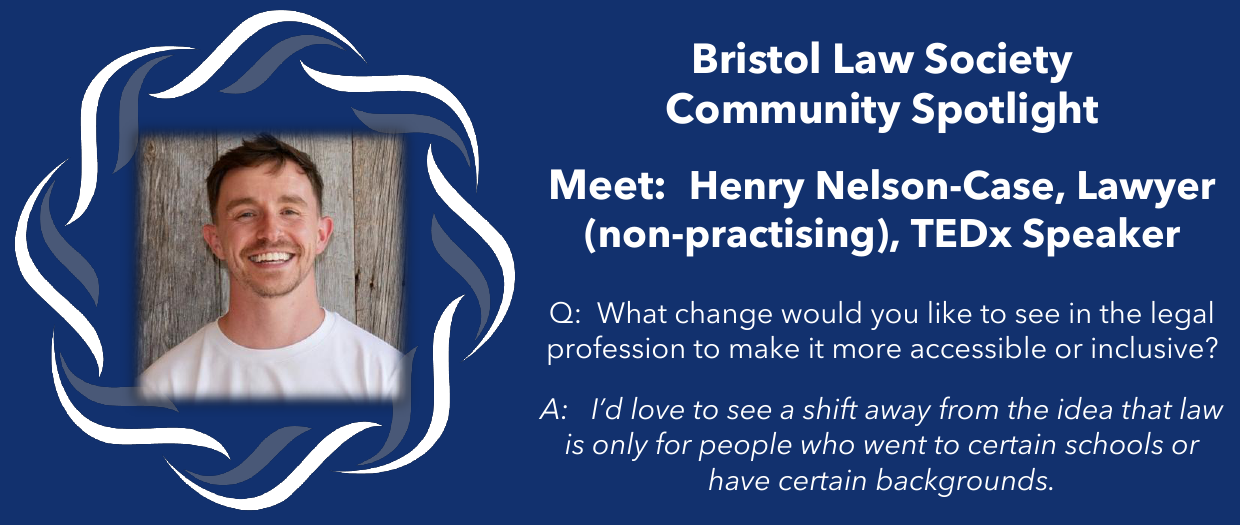
What change would you like to see in the legal profession to make it more accessible or inclusive?
I’d love to see a shift away from the idea that law is only for people who went to certain schools or have certain backgrounds. More transparency around routes into law, clearer guidance for non-traditional paths, and support for people from diverse backgrounds would make a huge difference. Accessibility isn’t just about money, it’s about culture and perception too.
What advice would you give to someone who may feel that a career in law is not ‘for people like them’?
Don’t write yourself off. Law might seem intimidating or exclusive, but there’s room for people from all kinds of backgrounds. Focus on what you can control, your skills, curiosity, and persistence, and find mentors or peers who encourage you. You don’t have to fit a stereotype to succeed.
One piece of advice for Bristol law students or early career lawyers
Build relationships and stay curious. Law is a long game, the profession can be tough, but the friends and people you meet along the way will open doors you didn’t even know existed. Also, try to understand the practical side of law, not just the theory, it will help set you apart.
What do you think is least talked about when it comes to entering or progressing in the legal profession?
I think people don’t talk enough about how important networking, mentorship, and gaining real world experience are alongside grades. Doing well academically matters, of course, but building relationships, learning from others, and getting hands on experience often make the biggest difference when it comes to moving forward in your career.
Your TEDx talk was a brave & incredibly honest share. Could you tell us how that opportunity came about & how you felt delivering it.
Do you know what, this opportunity was actually my first time ever doing public speaking as I’ve always been quite a nervous person and not that great at speaking to an audience.
I was in Thailand, as I was just about to turn 30 and I had just broken up with my then girlfriend, so went off to South east Asia with my mate. Whilst in Northern Thailand and at a party, I saw an email from the TEDx team asking if I’d like to be involved and deliver a talk. I’d consumed a few buckets of juice, thought it was a hoax and email responded to say yes.
Upon landing back at Heathrow, I saw that I had received official e-mails from the TEDx team asking for my talk detail, information to book my flights to Bulgaria (where it was being held) and I quickly realised it was actually happening, I’ll be stood on the red circle.
In terms of delivering, the morning of the talk I remember being in my hotel room reading over my notes and I teared up as I thought wow this is happening, how have I got here. From working in a law firm where I was made to feel so bad and I was constantly on the edge, to now delivering a TEDx talk in Bulgaria around men’s mental health and well being - it was an incredible opportunity,
What opportunities do you think does social media creates for junior lawyers that didn’t exist before?
I think social media can create incredible opportunities for junior lawyers - it’s given me so many opportunities that I never anticipated I’d have. For example, I was recently with the Chancellor, Rachel Reeves, discussing the cost of living crisis, student loans and how to support the next generation.
This all came through building a personal brand, networking and ultimately putting myself out there. Of course this can be incredibly scary, especially in a regulated and traditional profession like the legal profession. But if someone is looking to break into this space and create opportunities for themselves, this can still be done by breaking it down in to smaller chunks such as firstly engaging with content on platforms like LinkedIn, then start posting your own content once or twice a week and then gradually build your confidence up and start building out more.