

Legal Life: Community Spotlight on Farah Hussain, Associate, Awdry Law
Can you tell us about your journey into law and where you are now?
My journey into law has not been a straight line, and that is something I am proud of. After graduating, I did not go straight into a traditional legal training route. Instead, at the age of 21, I purchased a business and went on to run a Post Office for 15 years before returning to law.
Alongside that, I built a portfolio of properties separately from my legal career. That gave me first hand insight into property ownership, investment and long term decision making, and a personal connection to the property sector long before I specialised in to the commercial property sector.
Looking back, those years gave me invaluable life and commercial experience. Running a business and building a property portfolio taught me resilience, responsibility and how to make decisions with a long-term view. It also helped me understand the pressures business owners, landlords and investors face, which is something I now draw on regularly in my commercial property work.
I qualified as a Chartered Legal Executive through CILEX in 2019 and, in the same year, cross qualified as a solicitor. I now work in commercial property, advising clients on a wide range of real estate transactions and developing a strong interest in the commercial and financing structures behind property deals, including Shariah-compliant finance where relevant. For anyone trying to break into the profession, I hope my journey shows that there is no single route into law.
What inspired you to become a lawyer, and who or what supported you along the way?
There was no single reason that led me to law. It was a combination of ambition, curiosity and a desire to build a stable, meaningful career. Coming from a working class background, financial stability mattered, but so did the chance to enter a profession where hard work and determination could open doors.
I am a second generation British Pakistani woman and grew up around convenience stores and shops, as my mother owned her own business. In many ways, business was in my blood from an early age. No one in my family or close circle was a solicitor, so entering the profession meant stepping into unfamiliar territory.
That background shaped me. It taught me independence, resilience and the value of creating opportunities rather than waiting for them. My family and close friends have been my greatest support throughout, giving me the encouragement and confidence to keep going and become the lawyer I am today.
What’s one challenge you’ve faced in your legal journey and how did you navigate it?
One of the biggest challenges I faced was building a legal career without connections, guidance or a real understanding of how the profession worked. I had to learn the unwritten rules of the legal world through experience, often by trial and error.
That meant working out how to find opportunities, build confidence, develop professional relationships and understand what progression in law could look like. There were times when the path felt unclear, but I kept asking questions, learning from each experience and moving forward.
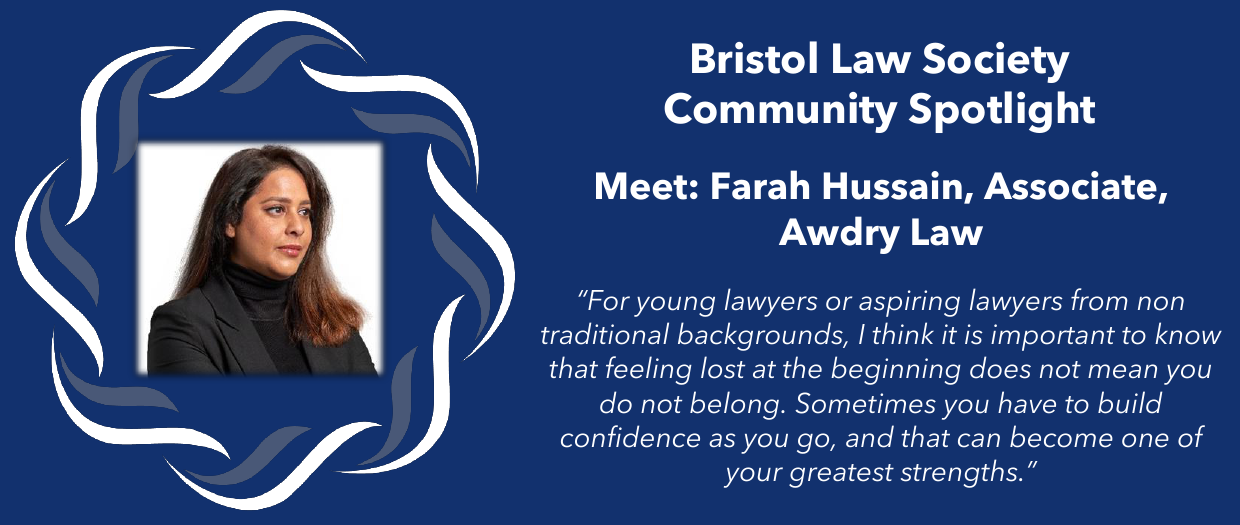
For young lawyers or aspiring lawyers from non traditional backgrounds, I think it is important to know that feeling lost at the beginning does not mean you do not belong. Sometimes you have to build confidence as you go, and that can become one of your greatest strengths.
What opportunities or experiences have been most valuable to your development so far?
The most valuable experiences in my development have come from a willingness to keep learning and the relationships I have built along the way.
Every opportunity to learn has mattered, whether through client work, technical training, observing experienced lawyers or learning from mistakes. Each experience has helped me build confidence and better understand the kind of lawyer I want to be.
Relationships have also been central to my journey. Over time, colleagues became mentors, supporters and, in many cases, lifelong friends. Some of the most valuable opportunities have come from a conversation, a piece of advice, a challenging matter or someone taking the time to believe in me. Those moments continue to remind me how important it is to support others coming through the profession.
What sets your work or interests apart from the “traditional” legal path?
What sets my work and interests apart is the combination of my commercial property focus and the lived experience I bring to it. Having grown up around shops, run my own business and built a property portfolio separately from my legal career, I understand that property is not just about documents and title. For many clients, it is about livelihood, investment, growth, security and long term decision making.
That perspective helps me give advice that is technically strong, but also practical, commercial and aligned with what the client is trying to achieve in the real world.
I am particularly interested in the commercial and financing structures behind property transactions, including specialist areas such as Shariah compliant real estate finance where relevant. However, my core focus remains commercial property. I enjoy working at the intersection of law, business and property, helping clients navigate transactions with confidence and achieve practical outcomes.
What do you think is least talked about when it comes to entering or progressing in the legal profession?
One of the least talked about aspects of entering and progressing in law is learning how to navigate the profession itself, especially if you do not have connections, a mentor or a clear roadmap.
Coming from a non traditional and working-class background, I quickly realised that technical ability and academic achievement are important, but they are not enough on their own. Soft skills matter too: building relationships, communicating with confidence, understanding workplace dynamics and learning how to advocate for yourself. For aspiring lawyers without a ready made network, those skills can be just as important as getting through the door in the first place.
What advice would you give to someone who may feel that a career in law is not ‘for people like them’?
Start before you feel ready.
My advice is to take practical steps, even if the profession feels unfamiliar. Ask questions, attend events, introduce yourself, seek out mentors and follow up with people who are willing to help. Do not wait until you feel confident to put yourself forward; confidence often comes from taking action.
If you do not come from a legal background, focus on what you can control: your work ethic, your attitude, your willingness to learn and the relationships you build. Your background does not make you less capable; it can give you perspective, resilience and drive.
Law may not always feel accessible at first, but that does not mean it is not for you. Keep showing up, keep learning and keep creating opportunities where you can.
How do you define success in your legal journey at this stage of your life?
At this stage of my life, I define success as growth with purpose. It is about continuing to develop as a lawyer, staying grounded in my values and making a positive impact through the work I do.
Professionally, success means becoming a trusted advisor to my clients, building my expertise in commercial property and delivering advice that is technically strong, commercially practical and informed by real world property experience.
Personally, it means enjoying the journey, remaining close to the people who have supported me and creating opportunities for others who may not see a legal career as accessible to them.
One piece of advice for Bristol law students or early career lawyers.
Back yourself, then take up space.
Work hard, stay curious and build relationships before you need them. Seek mentors, ask questions and put yourself forward, even when it feels uncomfortable. If you do not come from a legal background, do not wait for permission or for opportunities to find you create them. The profession needs different stories, perspectives and voices, including yours.
What change would you like to see in the legal profession to make it more accessible or inclusive?
I would like to see the profession make access feel real, not just possible. For people from non traditional backgrounds, opening the door is only the first step. What makes the difference is practical support: work experience, mentoring, scholarships, outreach and honest guidance on how to navigate a profession that can otherwise feel unfamiliar.
I would also like to see diversity championed more visibly at senior levels. Representation matters, but so does progression. Meaningful inclusion means creating pathways for people not only to enter the room, but to grow, lead and feel that they truly belong there.
What does the future look like for you?
The future, for me, is about continuing to build a strong commercial property practice with purpose, integrity and long term impact. I want to keep developing as a trusted advisor to clients, known for clear, commercial and practical advice, and for understanding not only the legal issues but the wider business objectives behind each transaction.
As I progress, I want to contribute meaningfully to the growth of my team and firm by building strong client relationships, supporting colleagues, mentoring aspiring lawyers and taking on greater leadership responsibility.